

Your Maintenance Schedule Is a Calendar. Your Machinery Doesn't Keep One.
Read More
Lloyd's Has Started Underwriting on Live Vessel Data. What Happens to Everyone Still on Survey Cycles?

By : Capt. Umesh Thanawalla | September - 2026
A ship’s condition is never constant. Machinery wears, operating patterns change, and small anomalies can develop between inspections. Oddly, though, much of marine risk assessment still works through periodic snapshots of those conditions.
At the same time, insurance markets are becoming increasingly competitive, with rates under pressure as capacity remains strong. For insurers, this puts greater emphasis on underwriting discipline, risk differentiation and loss prevention. With less room to compensate for uncertainty through pricing, better evidence of the underlying risk becomes increasingly important.
As digital transformation accelerates, that static model feels dated compared with more active systems.
In March 2026, Chaucer Group and Ceto AI launched a marine managing general agent (MGA) operating as a Lloyd’s coverholder, with capacity from Tokio Marine Kiln. Its hull underwriting model uses high-frequency machinery and performance data to assess vessel risk, moving beyond scheduled surveys and point-in-time assessments.
This launch has brought more than an innovative insurance product. It shows the industry a new way to establish evidence about a vessel. Instead of relying primarily on what a survey says about its condition on any given day, underwriters can now examine how that vessel has been performing over time.
The difference matters as global fleets get older. While the average merchant ship was more than 22 years old, as recorded by UNCTAD in 2023, age alone is a blunt indicator of a vessel's condition or value. Two vessels that have spent an equal number of years at sea can have very different maintenance histories, operating profiles, and equipment conditions.
For stakeholders, a vessel passing its last survey is important. But they also need to understand what happened after that.
When the Risk Can Be Seen Every Day
Problems developing on a vessel cannot always be observed on a survey date. Equipment deterioration builds up gradually. Operating conditions can expose weaknesses, and seemingly minor deviations can become significant risks if they persist.
With continuous vessel telemetry, insurance underwriters can see those patterns as they develop.
When high-frequency insights improve the quality of machinery performance data, insurers can identify signals that may remain hidden between survey dates. Recurring anomalies, gradual performance changes, and other indicators of deterioration can then become part of a vessel’s risk profile.
The Chaucer-Ceto model’s underwriting approach uses high-frequency machinery and performance observations to provide continuous monitoring and predictive insights. Instead of relying on historic proxies alone, an insurance company can assess a vessel’s risk using more current evidence of its condition and functionality.
Maritime companies also have a practical advantage with this new model. A vessel that consistently demonstrates stable machinery performance has a positive operational record to support its risk profile. This evidence does not depend on a few inspection dates.
So What Happens to the Owners Still on Survey Cycles?
Vessel owners who do not yet have a continuous stream of operational measurements will not be excluded from the insurance market. Surveys, class requirements, and physical inspections are still necessary.
The harder question is whether they will have adequate records to demonstrate the quality of their risk profile when other vessels can provide richer underwriting inputs.
That difference will become increasingly important.
The Chaucer-Ceto model is focused on vessels capable of generating onboard machinery sensor data. Owners without that capability may have well-maintained vessels, but their condition is represented primarily through survey reports, maintenance history, inspection findings and other performance indicators.
The wider industry is moving towards greater use of continuous digital evidence.
In 2026, the IMO Facilitation Committee approved a Strategy on Maritime Digitalisation centred on interoperability, standardisation and data sharing. It does not make constant vessel monitoring a regulatory requirement. It does, however, point towards a maritime environment where reliable vessel information will be easier to exchange and apply.
Owners do not need to replace their surveys. But this is the right time to start building an additional record of vessel performance—before continuous evidence becomes an expected part of underwriting.
Live Risk Assessment Requires Strong Data Discipline
Continuous risk assessment also changes what owners need to do with the metrics their vessels already produce.
Deploying sensors is just the starting point.
The difficult task is creating a dependable operational record that can withstand scrutiny outside the vessel.
All information must be captured consistently from machinery systems, checked for gaps and anomalies, and connected to the operating context in which it was produced.
A temperature deviation would not explain much in isolation. To understand the actual issue, engineers may need to know the machinery involved, the operating conditions, previous behaviour and what happened afterwards.
That makes data governance part of the operational task.
Owners should be able to establish where a reading came from, on what basis it can be trusted, and how anomalies were investigated. Without this chain of evidence, a large volume of vessel data does little to show the real risk picture.
Another operational consideration is what happens when the outputs raise a concern.
A live underwriting model builds a closer connection between observation and response. If a system shows an abnormal pattern, the value of that information depends on whether the crew and shore team can examine it, document the response, and show how the issue was or will be addressed.
For any vessel information used in commercial decisions, owners need to clarify how they collect, validate, store, and share it.
For operators, the next step is therefore to make their telemetry streams trustworthy enough to support decisions beyond the engine room.
The Competitive Value of Knowing One’s Vessel
In the marine sector, a vessel’s reputation is built through its surveys, maintenance data and the experience of the people who operate it.
A continuous performance history adds another dimension: validation that the vessel has behaved reliably over thousands of operating hours, not just on the days when it was surveyed.
The additional evidence could create a new competitive advantage.
Between vessels of similar vintage, the one that can demonstrate years of stable performance through high-frequency data has a stronger basis for demonstrating its risk quality. As insurers increasingly leverage digital methods to assess risk, this difference could affect how vessels are viewed commercially.
For the crew, these systems also change what it means to know a ship well.
Experienced captains have learned to recognise when machinery sounds different, when performance is drifting or when something does not feel right. Digital systems can record those changes, extending that knowledge beyond individual experience.
As underwriting becomes more closely connected to real vessel performance, ships with the strongest operational track records may carry an advantage that age or a survey date alone cannot capture.
Trending Blogs
Featured
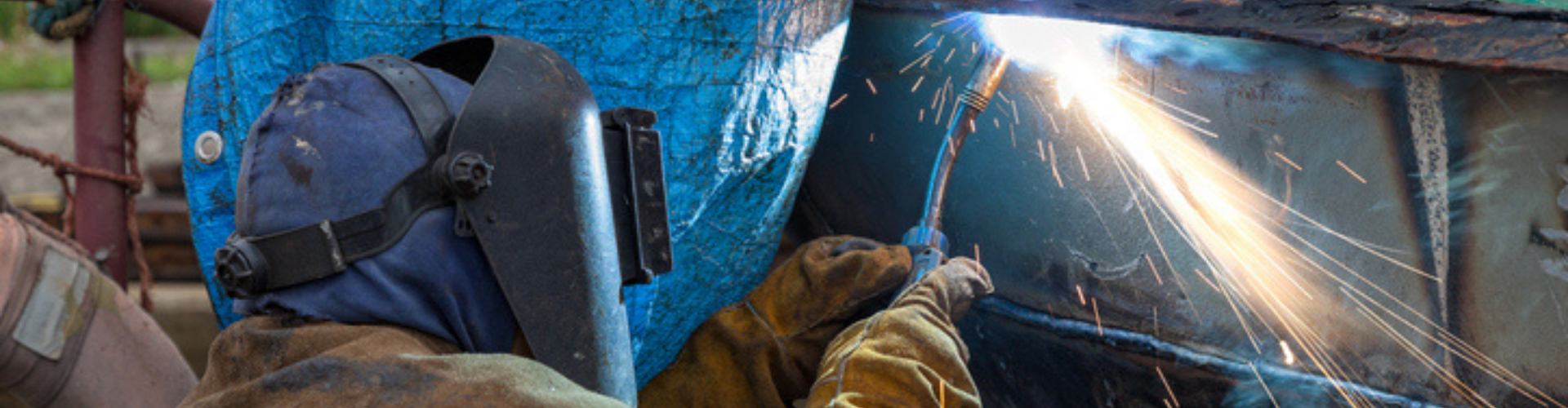
Your Maintenance Schedule Is a Calendar. Your Machinery Doesn't Keep One.
Featured
The First FuelEU Bill Is Landing. Most Owners Won't Know the Number Until It's Too Late.
Featured
Lloyd's Has Started Underwriting on Live Vessel Data. What Happens to Everyone Still on Survey Cycles?
Featured
Autonomous Ships Need More Than AI: Why Maritime Cybersecurity Matters


Digital platform with actionable insights for optimizing performance, augmenting your sustainability & growth goals.